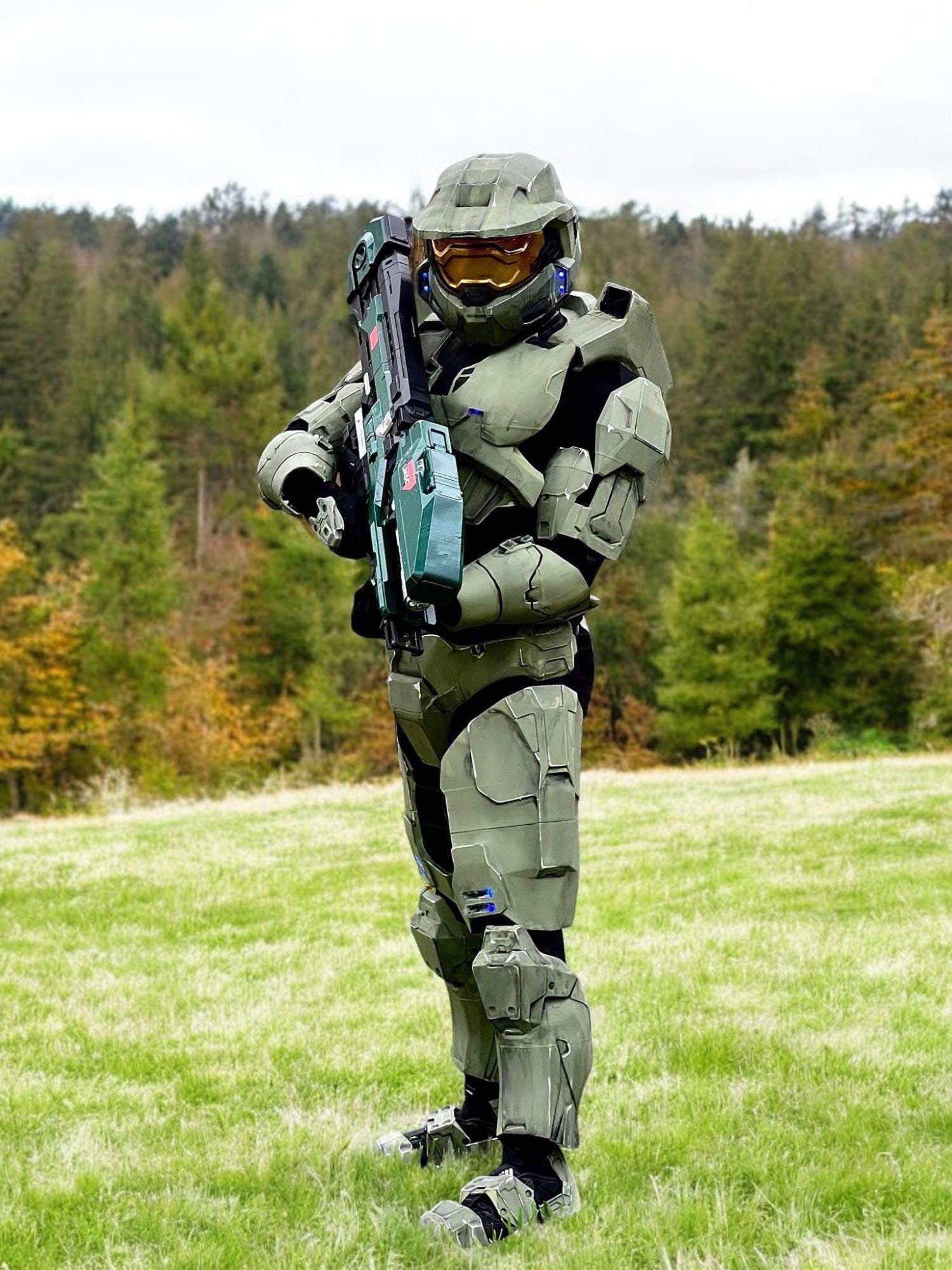
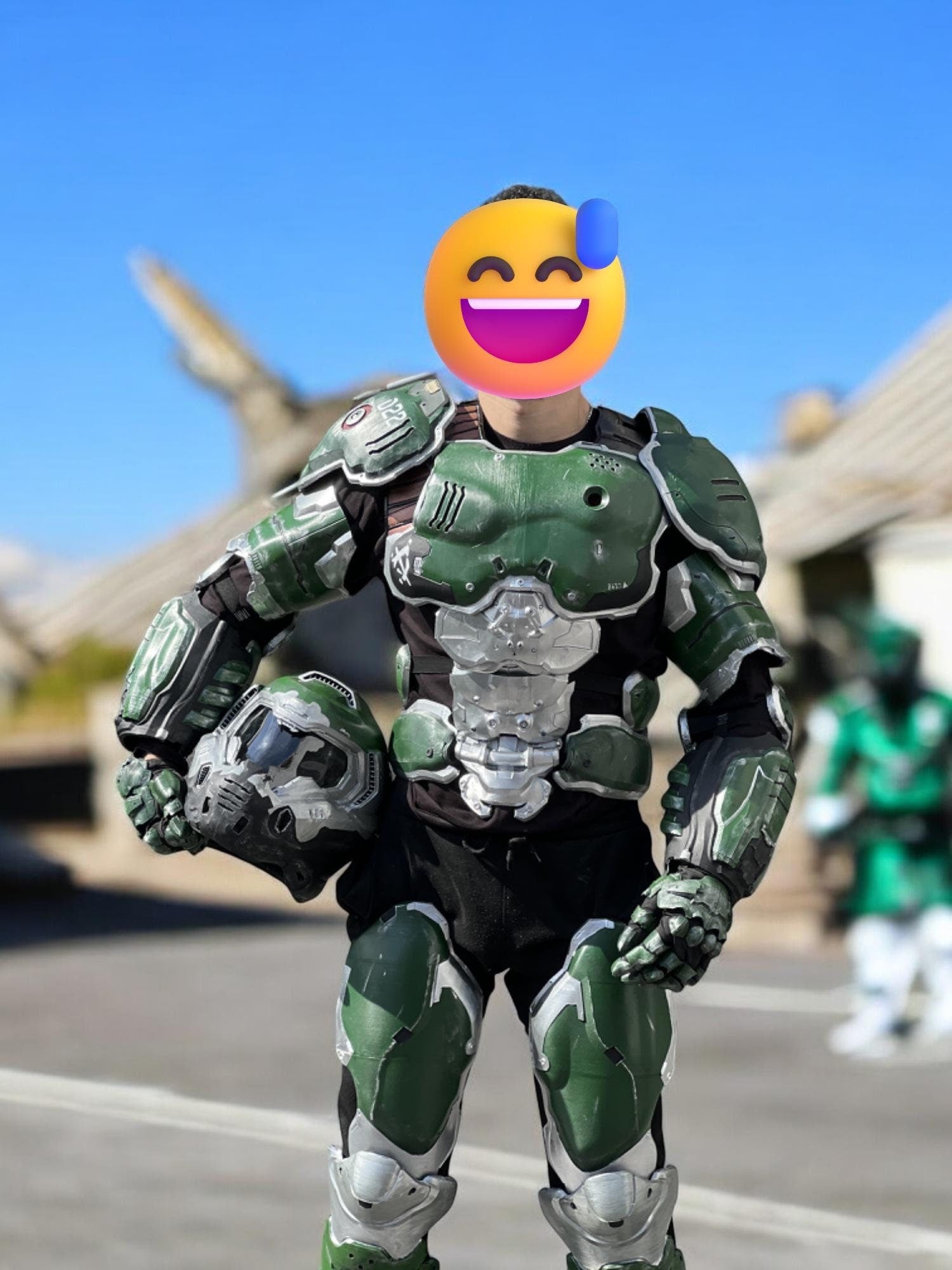
The Question We Get Most Often
"I love the look, but can I actually move in it?" is something we hear from customers constantly. And it's a completely valid concern. You're going to be wearing this armor for 6–8 hours, walking convention halls, posing for photos, navigating crowds, and possibly standing in long lines. If your costume restricts your movement or becomes painful after an hour, it's going to be a long, miserable day.
The good news is that wearability and screen accuracy don't have to be mutually exclusive. Here's how we approach it.
The Most Common Mobility Issues
Shoulder pauldrons that block arm movement. Large shoulder armor is a constant culprit. In games and films, armor is drawn or rendered without considering human anatomy and joint mechanics. In real life, pauldrons that extend too far forward or are too rigidly attached will prevent you from raising your arms above chest height.
Our solution: pauldrons attached to a floating rig rather than fixed to the chest plate. A floating attachment allows the pauldron to shift with your shoulder movement instead of fighting against it.
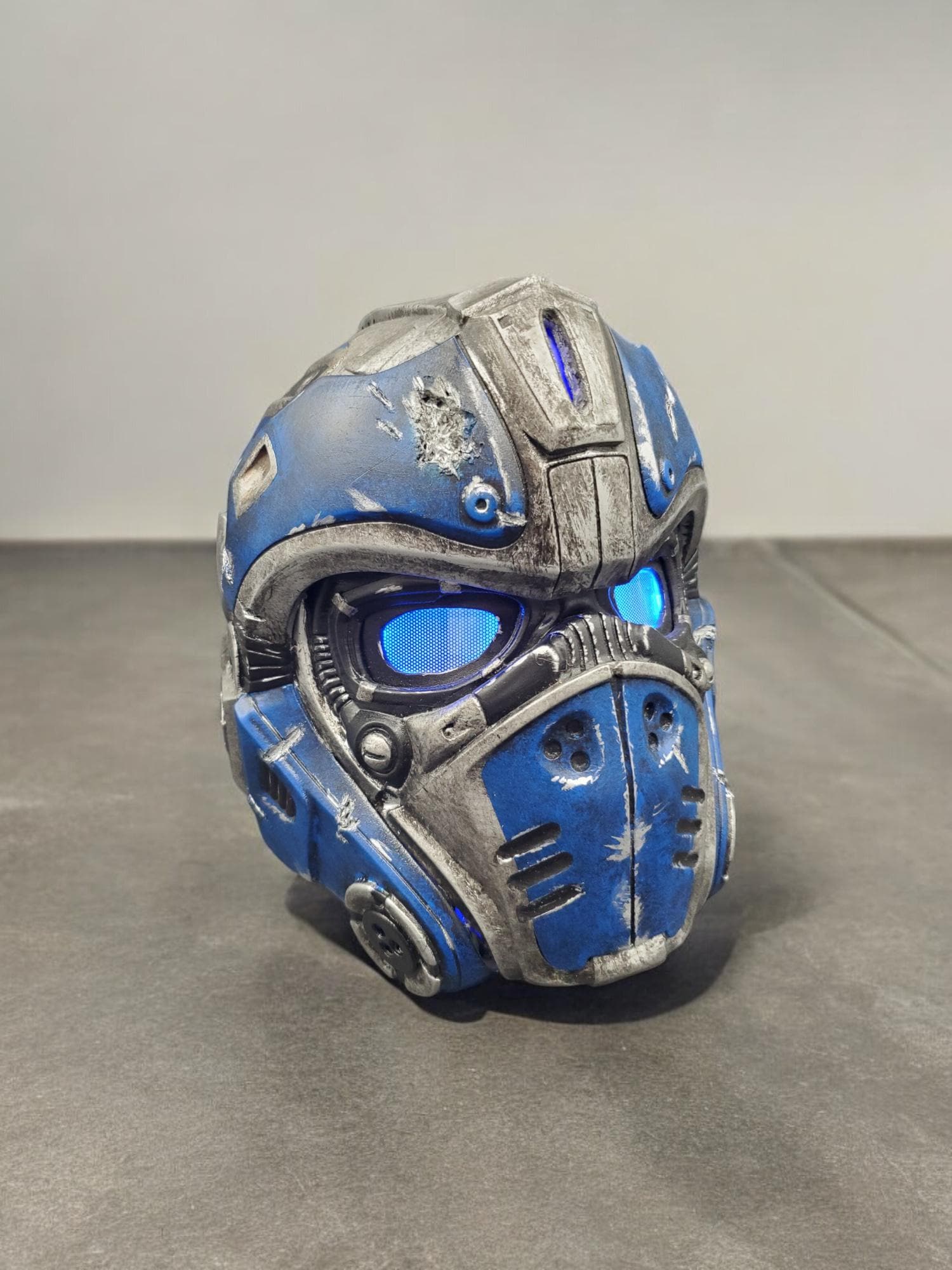
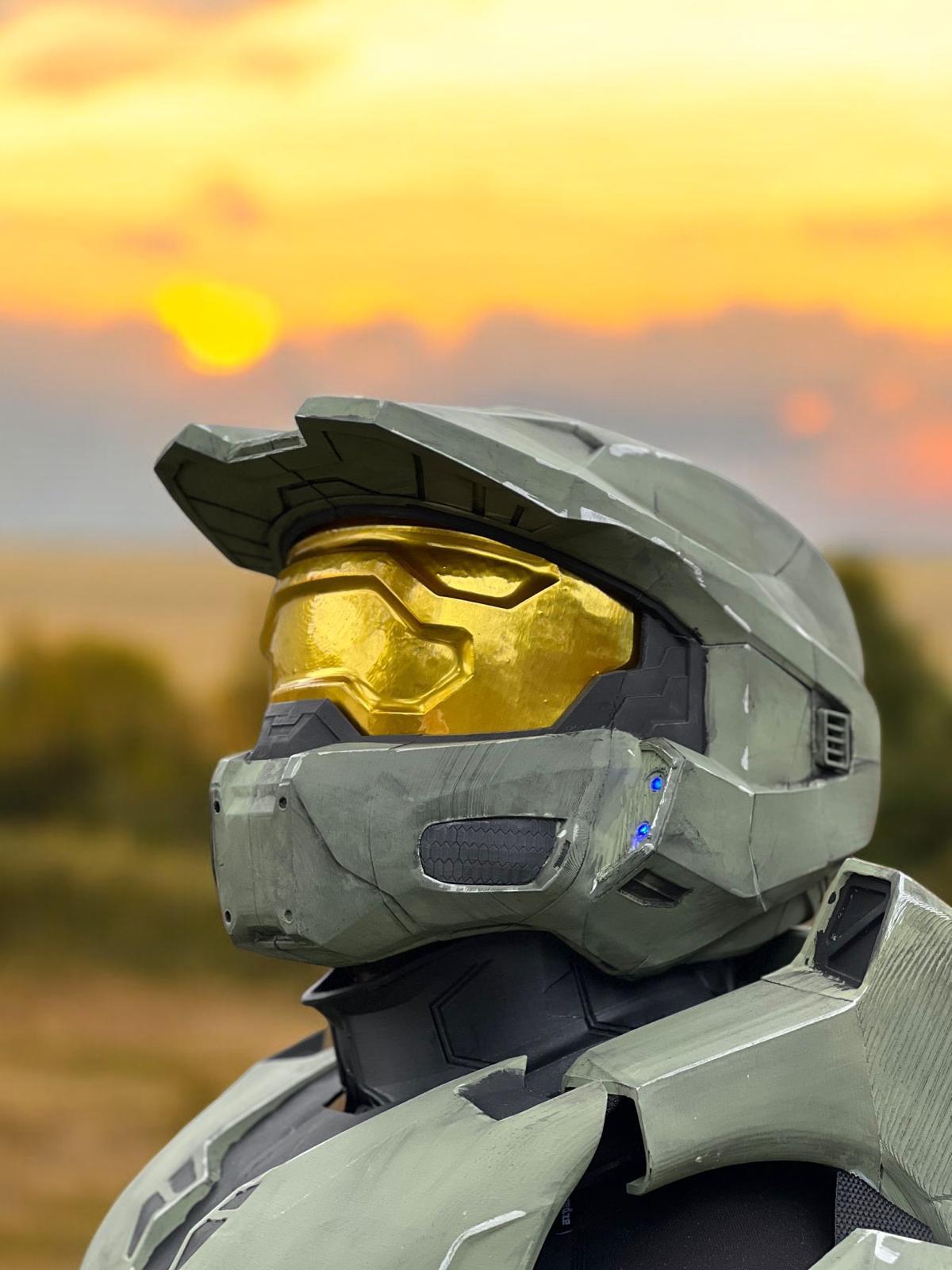
Helmets that limit peripheral vision. Full-face helmets dramatically reduce your field of view. Walking through a crowded convention hall with only a 40-degree forward field of view is both nerve-wracking and dangerous.
Our solution: we design visor openings as large as possible while maintaining screen accuracy. We also build in removable chin sections on many helmets so you can pop the lower section off between events and restore full vision when you need to navigate.
Chest armor that restricts arm swing. If the chest and back plates are connected rigidly at the sides, reaching forward (to shake hands, pose, or grab a door handle) becomes limited. We articulate the side connections using flexible joints or gap overlaps that allow the torso to expand and flex.
Knee and leg armor that prevents bending. Properly built knee guards should be designed in two segments: a rigid upper cap and a flexible lower attachment, separated by a hinged or gap-style connector. This allows the knee to bend naturally while still providing full coverage when standing straight.
Our Strapping System
How armor attaches to your body matters as much as the armor itself. We use a combination of:
- Elastic straps for pieces that need to flex with body movement
- Hard attachment points (magnets, snaps, D-rings) for pieces that need to stay precisely positioned
- Velcro for adjustable-fit sections that need to accommodate different body types
- Floating body rigs for large chest/back pieces, distributing weight across the shoulders rather than the waist
Custom Fit Options
If you're concerned about fit and mobility for your specific body measurements, we offer a custom fitting service. You provide us with detailed measurements (shoulder width, chest circumference, arm length, etc.) and we adjust our models and strap placements specifically for your anatomy. This is particularly valuable for cosplayers with non-average proportions or those who need specific accommodation for physical considerations.
Testing Before Your Convention
Once you receive your costume, test everything at home well before your event:
- Can you sit down and stand up easily?
- Can you walk up stairs without the leg armor catching?
- Can you reach forward to shake hands?
- Can you see well enough to navigate safely?
- Can you open a water bottle while wearing gloves?
If the answer to any of these is no, contact us. We'd rather help you solve the problem before your convention than hear about it after.